02/2023 – 06/2026
BMWK · LiBinfinity · Mercedes-Benz Kuppenheim
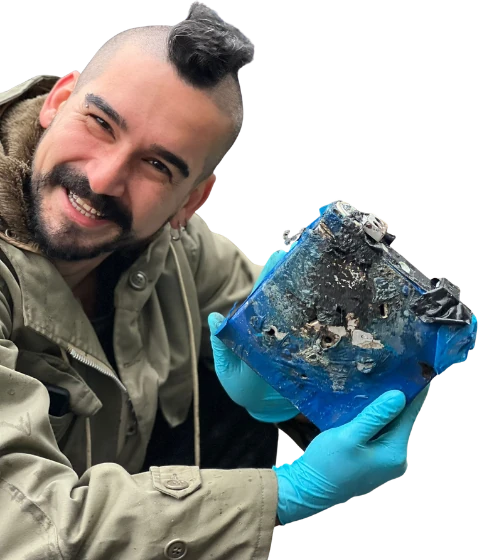
Development of a Holistic and Sustainable Recycling
Approach for Li-ion Batteries
The LiBinfinity project was a multi-partner circular economy initiative coordinated by LICULAR GmbH as the
consortium leader, alongside industrial partners Mercedes-Benz AG, Daimler Truck AG, Primobius GmbH, and
SMS
Group. Primobius and SMS Group were responsible for the mechanical recycling of battery modules into black
mass and the baseline hydrometallurgical pilot plant operation. The Karlsruhe Institute of Technology
(KIT)
managed the resynthesis of cathode active materials and reference cell testing, and TU Berlin handled the
Life Cycle Assessment (LCA) modeling. As the project manager for the TU Clausthal (IGMR) work packages, under the
supervision of my PhD advisor, I directed an approximate €475,000
budget to handle the next critical phase: further developing the recycling technology. I managed the
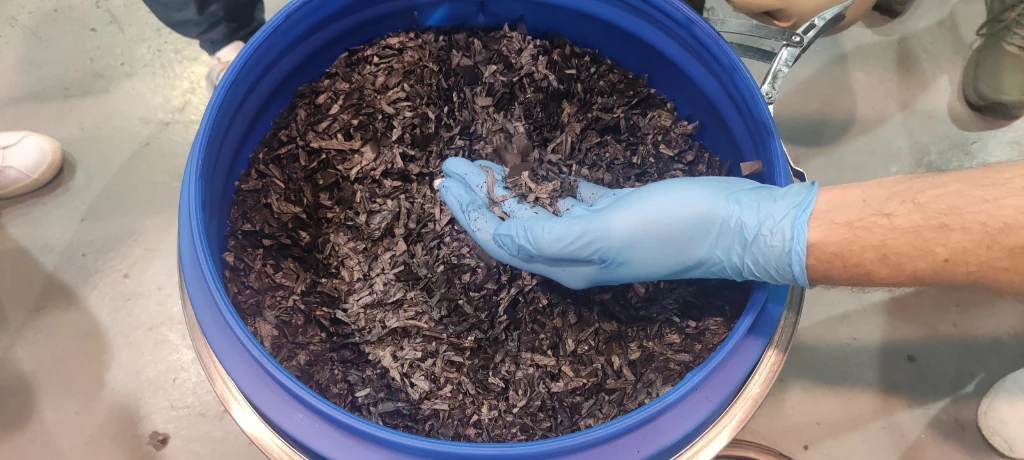
technical execution of thermal pretreatment, flotation, and hydrometallurgical processing, optimizing
complex chemical processes such as the synergistic leaching of mixed LFP and NMC black mass and
purification
routes to recover high-purity battery elements. Finally, I provided recycled high-purity materials to KIT
to
evaluate if their performance is comparable to commercially synthesized battery raw materials, and
provided
energy-mass flow data back to TU Berlin, enabling LCA models that validated recycling routes capable of
reducing CO₂ emissions. I had the opportunity to be involved on-site, facilitating a mutual exchange of
know-how and experience at a TRL7 scale pilot battery recycling factory of Mercedes-Benz being installed
in
Kuppenheim, Germany.
Kuppenheim TRL7 plant know-how
Battery-grade Li·Ni·Co·Mn recovery
Graphite recovery
LFP/NMC co-leaching
EU recovery targets exceeded
02/2023 – 12/2024
NDA Protected · Multi-Partner Initiative · LiB
Investigation of New Recycling Systems for Future
Battery Chemistries
In this strictly confidential (NDA-protected) project, I served as a project manager for our institute’s
work packages within a multi-partner circular economy initiative focused on end-of-life lithium-ion
battery
recycling. Under the supervision of my PhD advisor, I managed the work package
operations and budget over an 18-month period. My technical focus was on the pilot-scale processing of
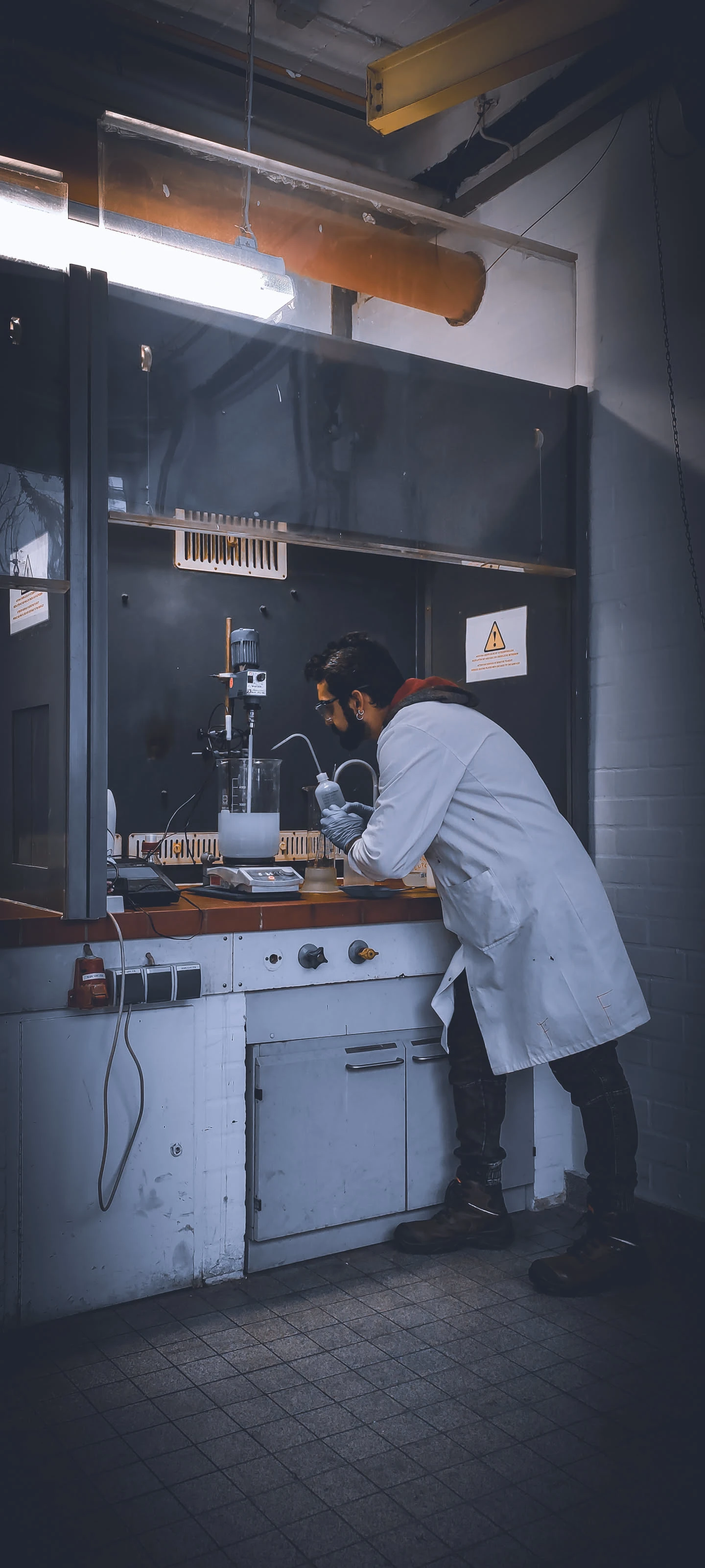
battery black mass. I led the execution of hydrometallurgical processing, optimizing complex chemical
leaching and precipitation routes to recover high-purity battery metals. I subsequently evaluated the
recovered materials to determine their competitiveness with commercially synthesized battery raw
materials.
Additionally, I analyzed, engineered, and compiled comprehensive energy-mass flow data to support Life
Cycle Assessment (LCA) modeling, which validated the environmental impacts and sustainability of the
developed recycling routes.
NDA-protected
Multi-partner initiative
Pilot-scale processing
LCA & Energy-mass flow
Chemical optimization
09/2020 – 04/2022
META Nickel Cobalt · TÜBITAK-RUTE · ASOS
Development of Li-ion Batteries from Manisa Lateritic
Ore
This project was my entrance ticket into the colorful world of batteries and hydrometallurgy. I was hired
by
META Nickel Cobalt Inc. R&D Department mainly for this specific project. It involved enriching mixed
hydroxide precipitates (MHP ≈ 60% Ni, Co, Mn) into battery-grade (>99.9%) separated Nickel, Cobalt and
Manganese sulfate crystals, followed by cathode active material precursor synthesis using them via the
co-precipitation method, followed by slurry and electrode preparation, coin-type half-cell assembly to
conduct electrochemical cycle tests and finally up-scaling of the entire process. Leading a small team of
technicians, I conducted 200 kg MHP cake batch leaching, neutralization, and impurity removal via
precipitation followed by solid-liquid separation via filter-press. I installed and led a solvent
extraction
operation line comprising 0.5 L mixer-settler units and utilized ion-exchange columns with various resins,
and accomplished the crystallization of purified raw materials from raffinates. In the subsequent stage, I
synthesized NMC-622 precursor via the co-precipitation method using these recovered raw materials at my
university’s Energy Storage Laboratory, where I had been researching co-precipitation method and cathode
material investigations, under the supervision of my Master’s advisor. I
performed all material characterizations (I was an authorized operator for the department's SEM),
electrode
slurry preparation, thermal treatments, aluminum foil coating, coin cell assembly in a glove box, and
various electrochemical tests (cycle, impedance, etc.). In the project's final stage, it was time to scale
up the holistic process. Pilot-scale equipment for both hydrometallurgy and NMC synthesis was manufactured
by ASOS Mechatronics Automation, in active collaboration with my chief, Dr. Şerif Kaya, and me. Once the
pilot system was installed and operational, TUBITAK RUTE completed the manufacturing of a 10 Ah
lithium-ion
pouch cell and validated its performance through 1,000 charge-discharge cycles and safety tests. This work
resulted in granted patents.
HPAL
NMC622 CAM
1000-cycle validation
Pouch cell production